
How to Compare Prices Between Different Flex PCB Manufacturers
Compare Prices Between Different Flex PCB Manufacturers
When comparing prices between different flex PCB manufacturers, several factors must be taken into consideration. These include price, delivery time, reputation and customer feedback. By considering all of these factors, it is possible to choose the best flex manufacturer for your business.
Flex PCBs enable smaller, thinner, and lighter electronic circuit assemblies. They can also withstand vibration, shock, and repeated bending. However, flex circuits cost more to fabricate than rigid PCBs. The higher manufacturing costs of flex circuits are partially offset by reduced component and assembly expenses. In addition, flex circuits can be more efficient than rigid boards for some applications, further offsetting the higher cost.
The most important factor in determining the price of a flex pcb manufacturer is the type of materials used. Most flex circuits are made of flexible copper foil, with FR-4 and CEM-1 being the most common. These are typically lower-cost options than the higher-performance, flex-friendly alternatives of FR-4H and CEM-3. For a flex circuit to be able to withstand the stresses of bending and movement, it must use higher-grade foils. These are available in rolled and etched forms, with rolled annealing providing the best mechanical properties.
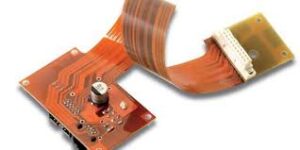
How to Compare Prices Between Different Flex PCB Manufacturers
Stiffeners and encapsulation also impact cost. They can be needed to reinforce the structure of a flex circuit or to protect it from environmental conditions. Options range from simple solder mask overcoats to complete silicone potting. The stiffeners and encapsulation can add considerable material, process steps, and complexity to the flex circuit. Similarly, the choice of surface finishes and coatings also impacts cost. While they provide important performance advantages, certain surface finishes like HASL (high aspect ratio) and ENIG (electroless nickel immersion gold) have high cost implications.
Other factors that influence the price of a flex circuit are the number of layers and the size of holes. In general, larger layers and holes have a greater impact on the total cost than smaller layers and holes. In addition, a thicker board with multiple copper layers will have a higher cost than a thinner board with fewer layers.
A final factor that affects price is the order volume. Larger orders allow for economies of scale that can drive down production costs. It is also important to ensure that the flex PCB supplier can produce the required quantity in a timely manner. In some cases, it may be necessary to switch to another flex PCB manufacturer if the first one is unable to meet your deadlines. In addition, it is advisable to always draft a contract before making any payments to the PCB supplier. This will help avoid misunderstandings and disputes in the future. A contract can also clarify the terms of the sale and set clear expectations for both parties. It is also a good idea to make sure the flex PCB supplier has the latest equipment in use. Old equipment can negatively impact quality and lead to costly delays.