
Can Pilates reformer equipment be used in group classes?
Pilates reformer equipment be used in group
When it comes to a workout that builds core strength and sculpts the body, Pilates is a beloved exercise. But the reformer—which is basically a bedded carriage that’s fitted with a system of customizable springs, rope pulleys, and a trapeze bar—can seem intimidating for those who are new to the technique. Luckily, there’s a way to make the machine less of an intimidating and more approachable: Group reformer classes.
A pilates reformer equipment is actually a versatile piece of equipment that can be used to do a whole-body stretch and movement-based workout for all body types and fitness levels. Its regulated motions and fluid transitions are kind to the joints, making it appropriate for those with a wide range of physical conditions, including chronic back pain, arthritis, fibromyalgia, and osteoporosis, as well as those who are injured or recovering from surgery.
The specialized equipment allows for a wide variety of exercises in multiple positions, from reclining to sitting to standing. And a variety of additional equipment, like a box, can be added to help users work different muscle groups. “The beauty of the reformer is it’s very scalable,” says Darren Wilson, an instructor at Studio Boom Pilates in Chicago. “You can use the basic set up and add the tower or other props to provide an even greater challenge.”
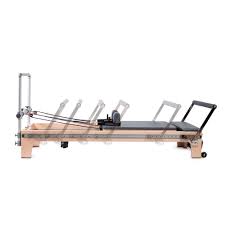
Can Pilates reformer equipment be used in group classes?
To do Pilates on the reformer, you lie down on a mat with your feet supported by shoulder blocks or a foot bar. A series of moves is then performed by moving the carriage, which is attached to the frame via springs with varying levels of resistance. The foot bar can be lowered or raised as needed to change the size of the carriage and the corresponding spring tension. Long straps and handles can also be attached to the end of the frame and used for pushing and pulling movements.
Using these bars and straps adds tactile feedback to the exercise, helping students execute moves correctly and giving them a clear sense of where they’re in space compared to mat Pilates, which leaves them waving their arms and legs in the air without much direction. In addition, the springs and sliding carriage add a unique mechanical advantage that helps students better engage their muscles, making the workout more challenging.
When using the reformer in a group setting, it’s important to be aware that the machines are heavy and can become dangerous if not handled correctly. Stacking reformers requires two people to lift them, so only allow clients who are strong and healthy enough to help lift the machines. Also, instruct your clients to lift the reformer from their legs and core rather than their arms and back.
When taking a reformer class, it’s also a good idea to begin with low spring resistance settings and gradually build up the intensity as you gain confidence in your skills and strength. And always be sure to communicate with your instructor if you have any pain or discomfort so they can offer modifications as necessary.